Kids’ Boxing Gloves: Sizing, Safety, and What to Buy

Boxing is one of the best disciplines a kid can learn — coordination, confidence, fitness, and respect all in one package. But putting the wrong gloves on a child sets up bad punching habits that take years to undo, and worse, can cause real hand and wrist injuries on small developing bones. Kids’ boxing gloves are not just “smaller versions” of adult gloves; the weight, padding, and fit all need to be matched to a child’s specific stage of development. This guide gives you the sizing logic, the safety standards to insist on, and what to skip past on the shelf.
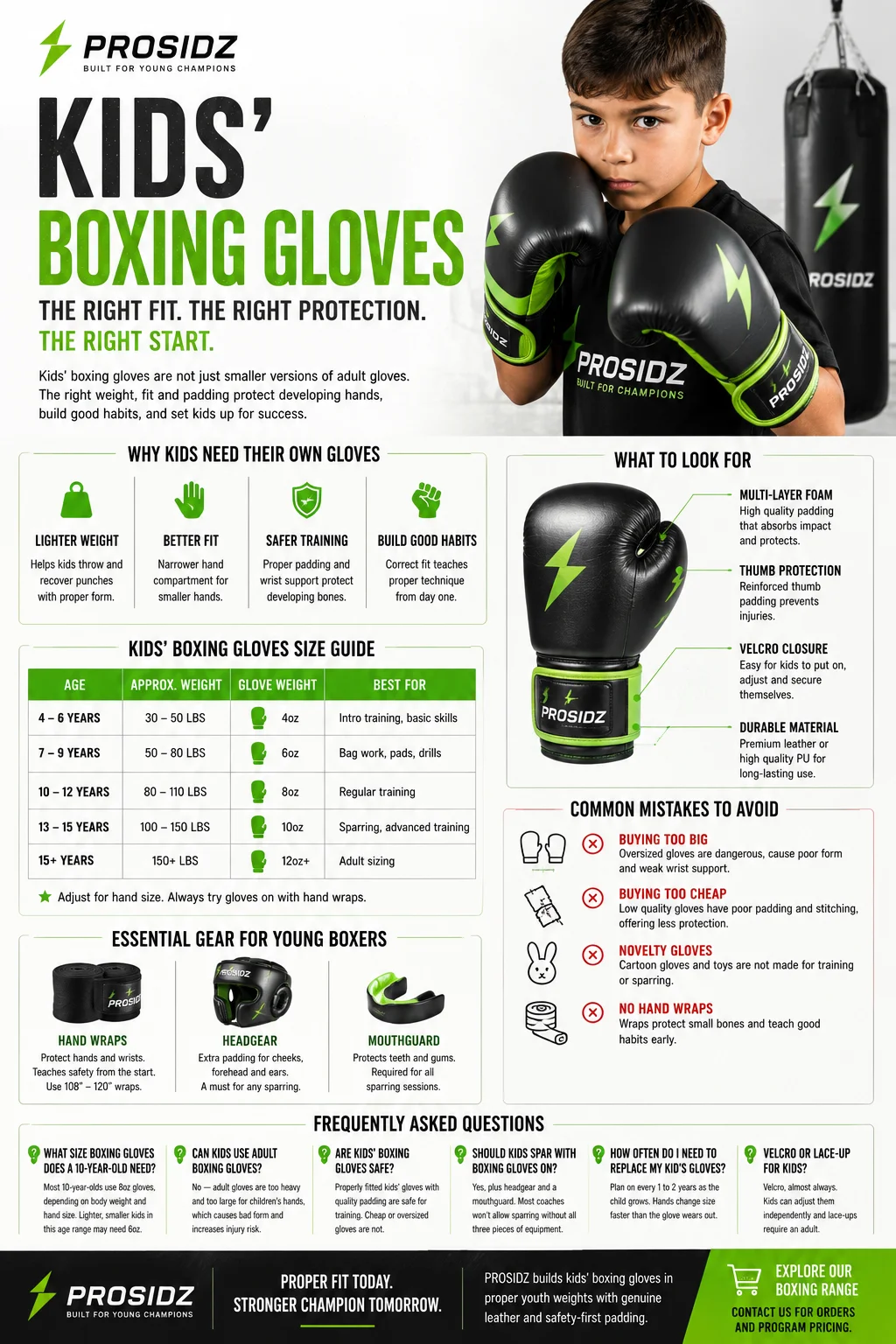
Why Kids Need Their Own Gloves
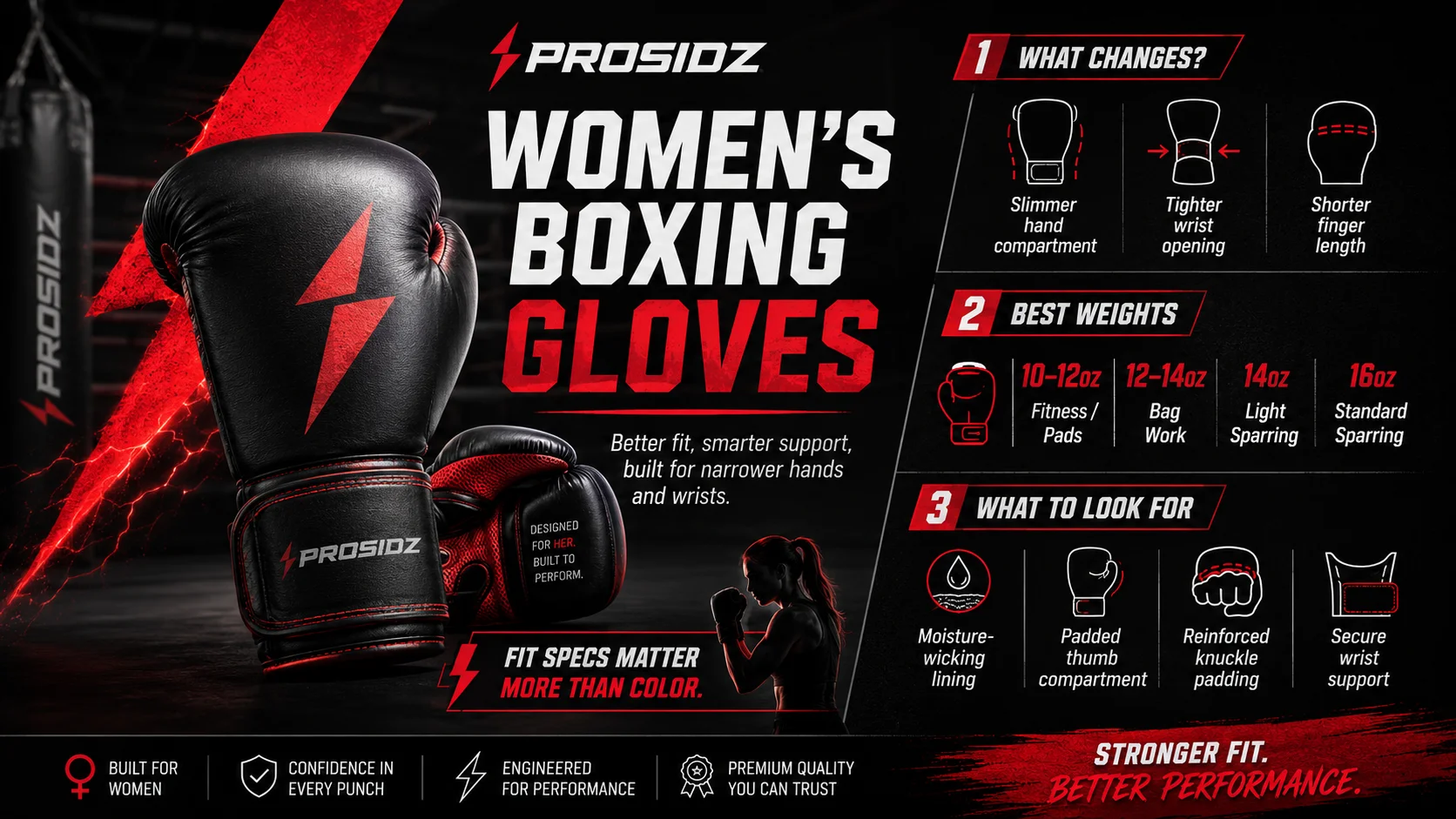
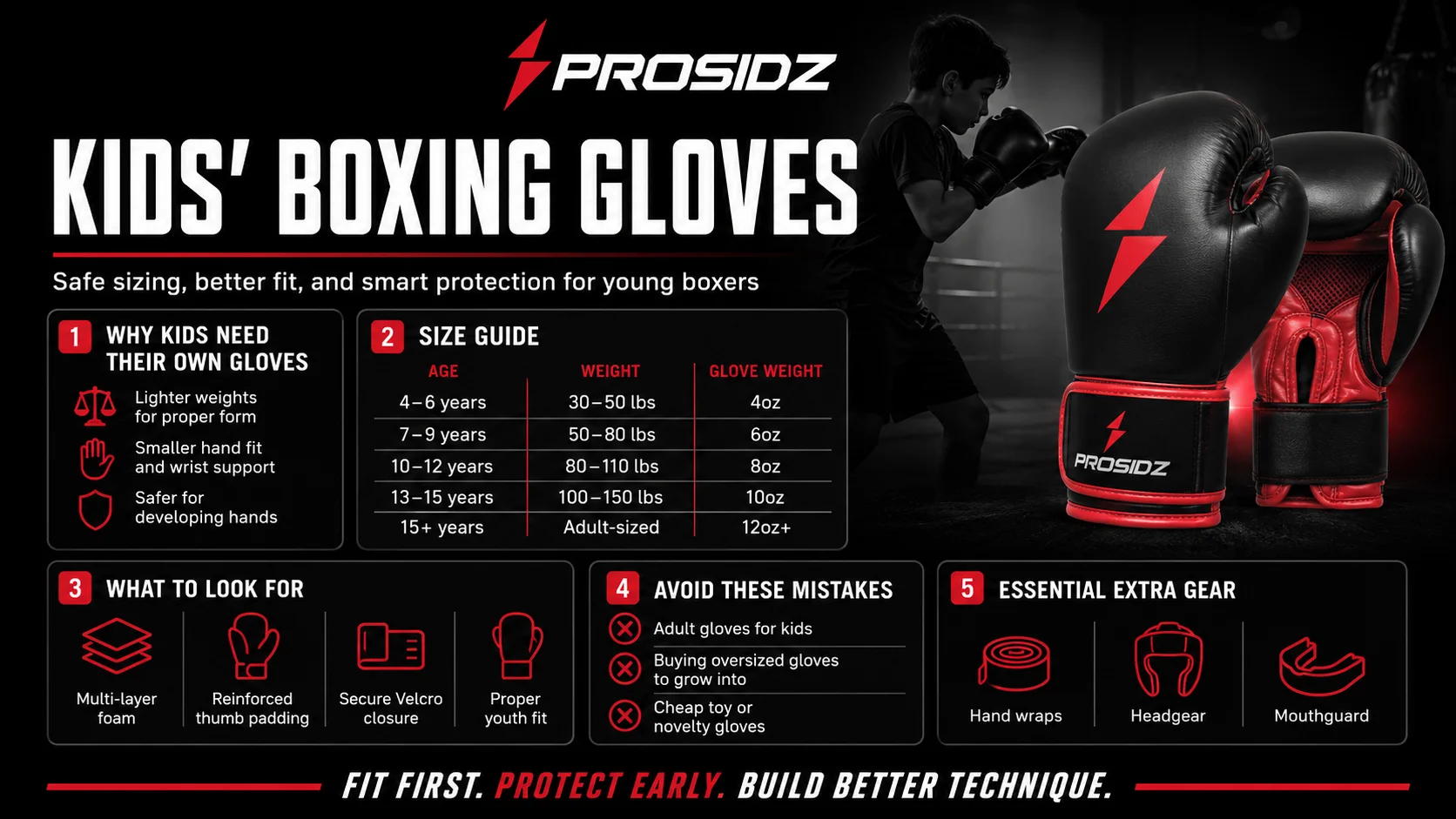
Adult gloves are heavy. Putting a 12oz adult glove on a 9-year-old forces them to drop their hands between combinations, throws off their balance, and trains poor punching mechanics that stick. Kids’ gloves are weighted lighter (4oz, 6oz, 8oz) so a child can throw and recover punches with proper form. They’re also shaped for smaller, narrower hands — adult gloves leave too much room around the knuckles and fingers, which means the fist isn’t properly braced inside the glove during impact. The combination of wrong weight and wrong shape is how childhood boxing injuries happen. Real kids’ gloves solve both problems.
Sizing Chart by Age and Weight
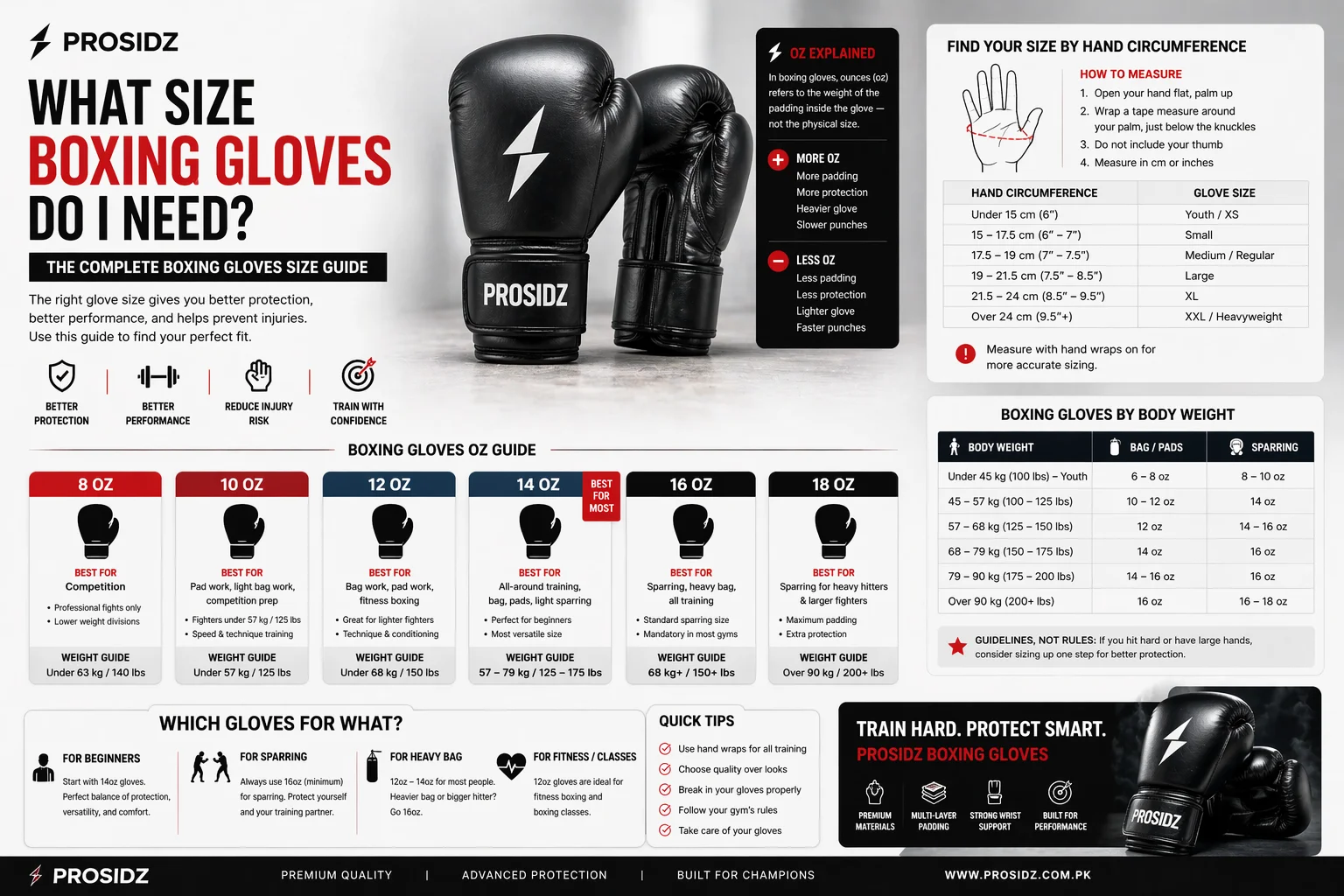
Use this table as a starting point, then adjust slightly for your specific child’s hand size. A child with bigger hands than typical for their age may need to size up; a smaller-handed child may need to size down. Always have the child make a fist with hand wraps on (yes, kids should wrap too) before deciding on a glove weight.
| Age | Approximate Weight | Glove Weight |
|---|---|---|
| 4-6 years | 30-50 lbs | 4oz |
| 7-9 years | 50-80 lbs | 6oz |
| 10-12 years | 80-110 lbs | 8oz |
| 13-15 years | 100-150 lbs | 10oz |
| 15+ years | Adult-sized | 12oz+ (adult sizing) |
Safety Standards That Actually Matter
For kids’ gloves, padding quality matters more than for adults. Look for genuine multi-layer foam, not the cheap single-layer foam that compresses to nothing within a few months. Reinforced thumb padding is critical — kids tend to throw with thumbs slightly out of alignment, and good thumb padding compensates. Velcro closures are almost always the right choice for kids since they can put their own gloves on and adjust them. Avoid lace-up gloves for children entirely — they require an adult to tie correctly every session, and a wrongly-laced kid’s glove is worse than no glove at all. Also avoid gloves with hard plastic reinforcements at the knuckle, which can hurt sparring partners or training equipment unnecessarily.
Common Buying Mistakes to Avoid
Don’t buy gloves “to grow into.” An oversized glove is genuinely dangerous for a child — the fist isn’t braced, the wrist support doesn’t sit in the right place, and the extra weight throws off form. Buy what fits now and accept you’ll replace gloves every year or two as the child grows. Don’t buy the cheapest gloves on the shelf either — kids’ gloves at the bottom of the price range often skimp on padding and stitch quality, which means worse hand protection on developing hands. Skip novelty gloves with cartoon characters and zero protective spec; these are toys, not training equipment. Look for gloves marketed clearly for boxing or martial arts training, not for play.
Wraps, Headgear, and Other Gear Kids Need
Hand wraps are not optional for kids any more than for adults — they protect small developing bones and teach hand-protection habits early. Use shorter, thinner wraps designed for kids’ hand sizes (108 to 120 inches usually works). For any partner work, kids’ headgear is mandatory at all reputable gyms, with extra cheek and ear padding to protect against off-target shots. A mouthguard for any sparring is also non-negotiable. Building these habits at age 8 means you have a teenager who automatically gears up correctly without being asked, which is a significant safety win for the rest of their boxing journey.
Frequently Asked Questions
What size boxing gloves does a 10-year-old need?
Most 10-year-olds use 8oz gloves, depending on body weight and hand size. Lighter, smaller kids in this age range may need 6oz.
Can kids use adult boxing gloves?
No — adult gloves are too heavy and too large for children’s hands, which causes bad form and increases injury risk.
Are kids’ boxing gloves safe?
Properly fitted kids’ gloves with quality padding are safe for training. Cheap or oversized gloves are not.
Should kids spar with boxing gloves on?
Yes, plus headgear and a mouthguard. Most coaches won’t allow sparring without all three pieces of protective equipment.
How often do I need to replace my kid’s boxing gloves?
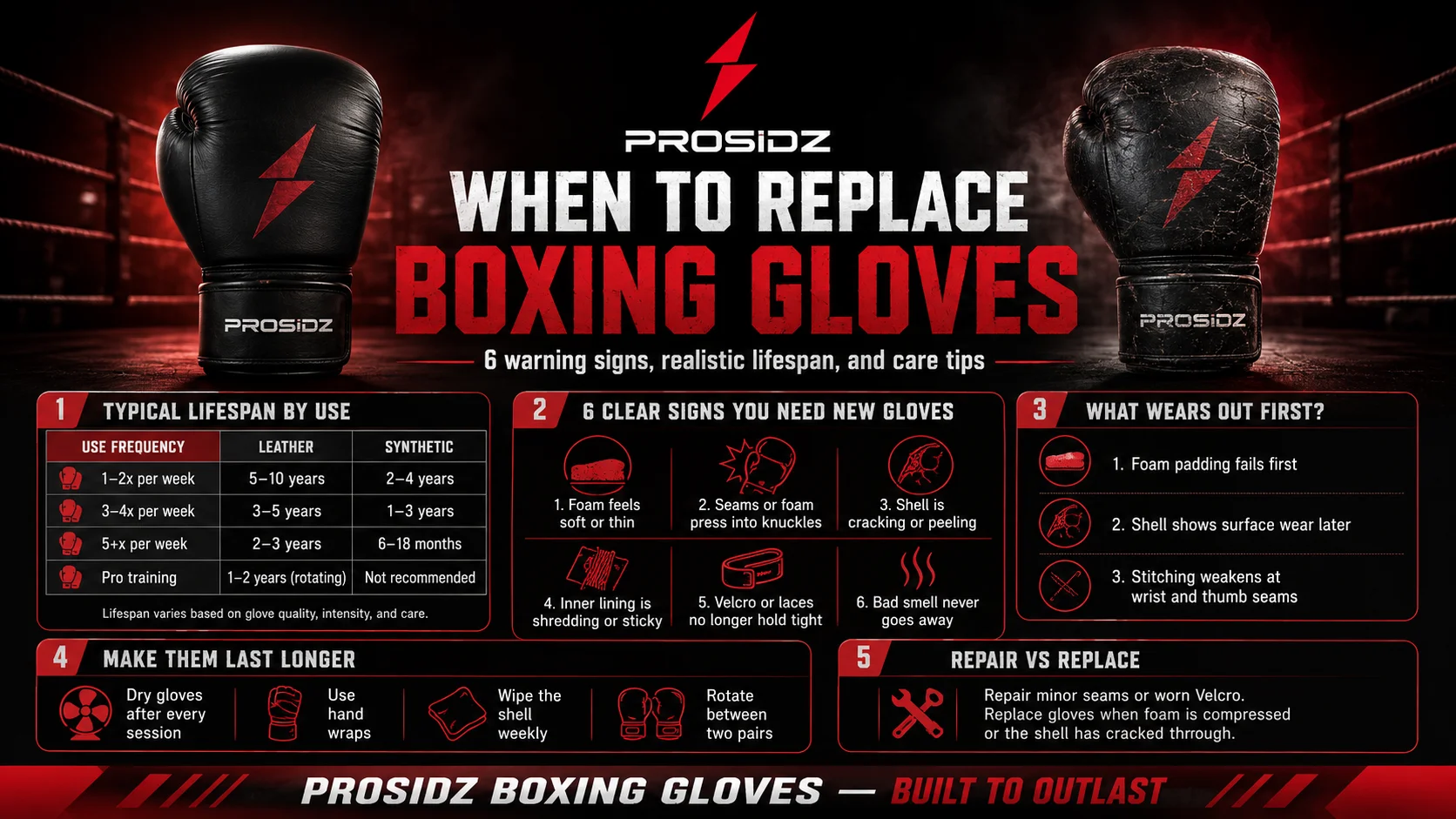
Plan on every one to two years as the child grows. Hands change size faster than the glove wears out.
Velcro or lace-up for kids?
Velcro, almost always. Kids can adjust them independently and lace-ups require an adult to tie correctly every session.
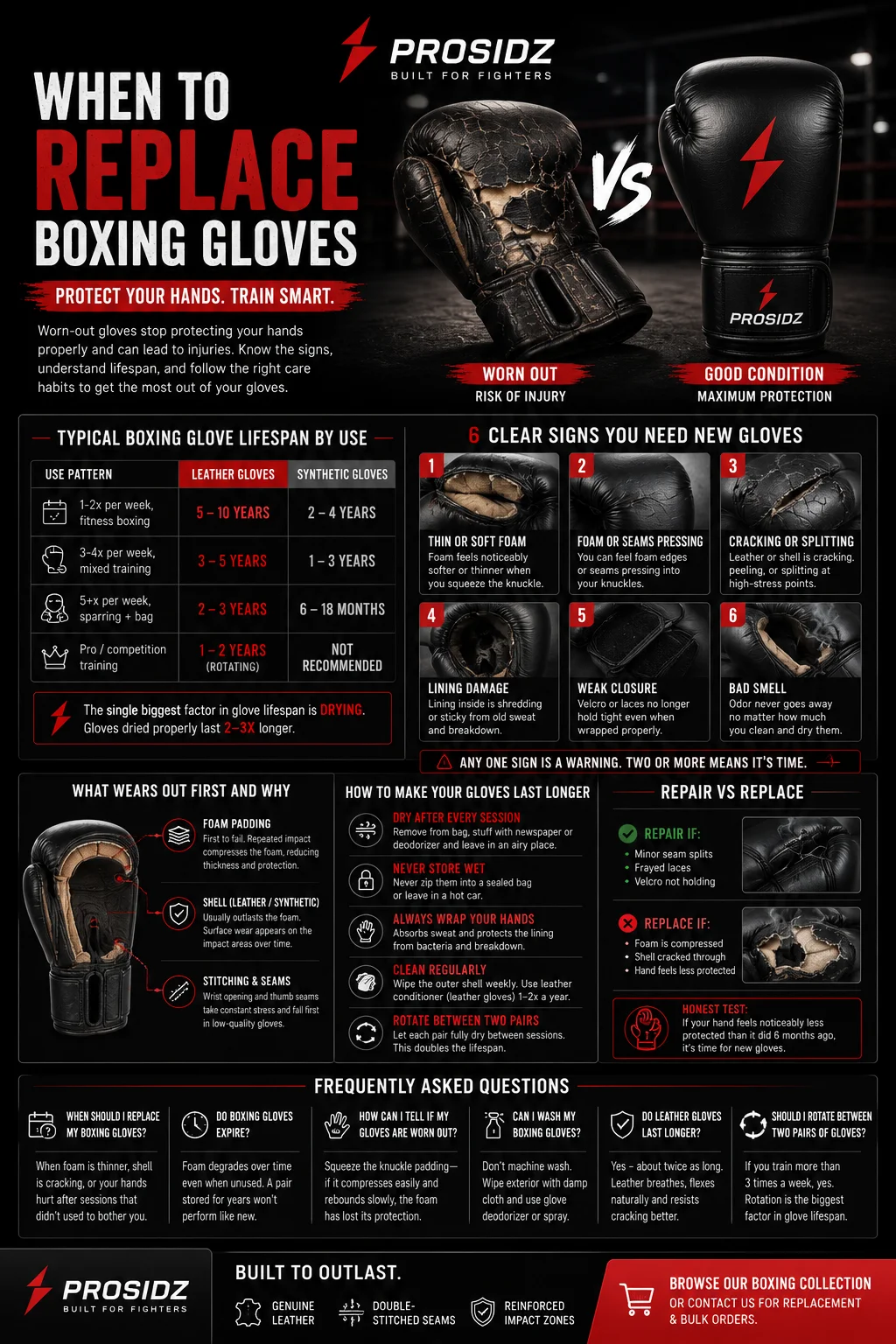
Prosidz builds kids’ boxing gloves in proper youth weights with genuine leather and proper safety padding — no toy-grade compromises. Explore our boxing range or contact us for school and youth program pricing.