
Boxing and MMA Headgear: Types, Padding, and When to Wear It

Headgear is one of the most misunderstood pieces of combat sports equipment. New boxers think it prevents concussions; experienced fighters know it does almost nothing for that and is really there to prevent cuts, abrasions, and broken noses. Different sports need different headgear styles, padding levels, and field-of-vision priorities, and using the wrong type can be worse than using none at all. This guide breaks down what headgear actually does, the major styles for boxing, MMA, and Muay Thai, and exactly when each one earns its place on your head.
What Headgear Actually Protects Against
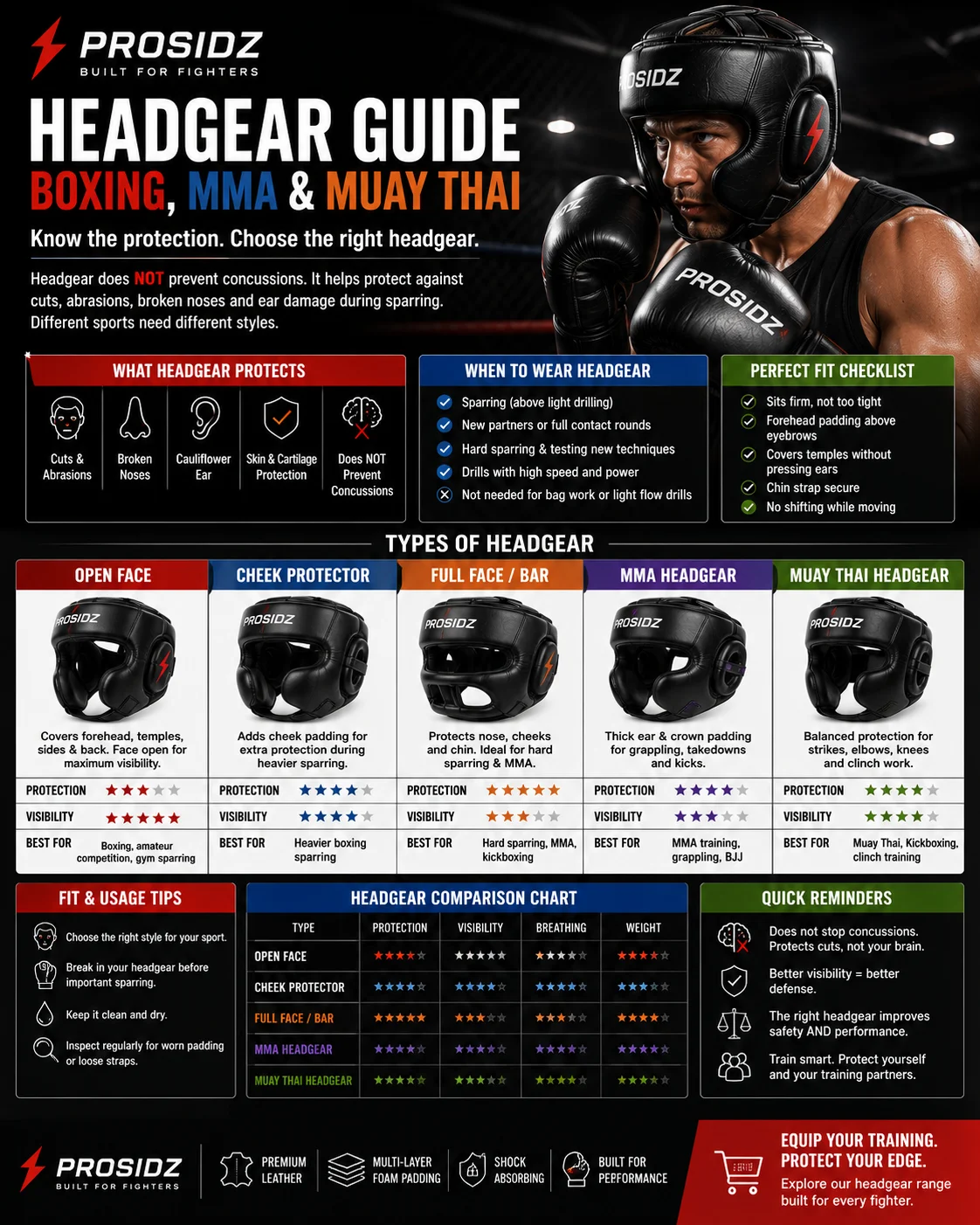
Modern research on combat sports has been clear for years: headgear does not meaningfully reduce concussion risk, and may even slightly increase it by giving fighters false confidence to absorb more shots. What headgear does reduce is the cuts, abrasions, broken noses, and cauliflower ear that come from repeated low-grade contact during heavy sparring. For most amateur boxers and MMA fighters, that’s still very valuable — a deep cut over the eye ends a sparring session and can keep you out of the gym for weeks. Headgear is not a brain protection device; it’s a skin and cartilage protection device.
Open Face Headgear: The Boxing Standard
Open face headgear covers the forehead, temples, sides of the head, and (sometimes) the chin and back, but leaves the face fully exposed. This is the standard for amateur boxing competition and most boxing gym sparring. The trade-off is clear: open face gives you maximum visibility and minimal padding interference with breathing, at the cost of zero protection for the nose, mouth, and cheeks. For boxing-only training, open face is almost always the right call — boxers throw fewer angled shots that hit the cheek and nose than MMA fighters or kickboxers do.
Full Face and Cheek-Protector Headgear
Full face headgear adds a padded bar across the cheeks and sometimes a chin cup, giving meaningful protection against nose and cheek shots. This is more common in heavy sparring and in MMA, where elbows, kicks, and knees create injury patterns boxing rarely sees. The trade-off is reduced peripheral vision and slightly restricted breathing, which is why most fighters don’t compete in full face headgear (and most boxing competitions ban it). For drilling, hard sparring, or any session where you’re testing new techniques and don’t want to leave with a black eye, full face is the practical choice.
| Headgear Style | Protection Level | Visibility | Best For |
|---|---|---|---|
| Open Face | Forehead, temples, ears | Excellent | Boxing, amateur competition |
| Cheek Protector | Open face plus cheekbones | Very good | Heavier boxing sparring |
| Full Face / Bar | Plus nose and chin | Reduced | Hard sparring, MMA, kickboxing |
| Mexican Style | Compact, dense padding | Excellent | Pro boxing, light sparring |
| MMA Combo | Padded ear cups and crown | Good | MMA, BJJ takedowns |
MMA and Muay Thai Headgear Differences
MMA headgear typically prioritizes ear protection (preventing cauliflower ear from grappling) and crown padding (for kicks). Many MMA models use thick ear cups and a wider top crown, sacrificing some visibility for added protection where the fighter actually takes shots. Muay Thai headgear sits between boxing and MMA — open enough to clinch and breathe, but with cheek bars and chin protection because of the kick and elbow risk. If you train pure boxing, don’t buy an MMA headgear — the field of vision and weight will hurt your training. If you train mixed disciplines, owning two pairs is often worth it.
Fit and When to Wear Headgear
Bad fit ruins headgear faster than bad design. The headgear should sit firm but not pressing, with the front padding above your eyebrows (not falling into your eyes), the side panels covering your temples without crushing your ears, and the chin strap or crown strap snug enough that the headgear doesn’t shift during movement. Headgear that slips during sparring is worse than no headgear because it can cover your eyes mid-exchange. As for when to wear it: any sparring above light tap-out drills, any session where new partners are throwing harder than expected, and any technique drill where partners are exchanging at speed. Light flow drills and slow technique work usually don’t need headgear.
Frequently Asked Questions
Does headgear prevent concussions?
No. Modern research is clear that headgear does not meaningfully reduce concussion risk. It protects against cuts, broken noses, and ear damage — not brain injury.
Should I wear open face or full face headgear for boxing?
Open face is the boxing standard — better visibility and acceptable for amateur competition. Full face is fine for hard gym sparring but not for competition.
Why do boxers wear open face headgear if it doesn’t protect the nose?
Visibility and breathing matter more in boxing than nose protection, because boxers can usually see and slip incoming punches. The nose is exposed by design.
Is MMA headgear different from boxing headgear?
Yes. MMA headgear has more ear and crown padding to handle grappling and kicks, while boxing headgear prioritizes vision and lighter weight.
How tight should boxing headgear fit?
Snug enough that it doesn’t shift during movement, but not so tight that you feel pressure on your forehead or temples after a few minutes. The padding above your eyebrows should not slide down.
Do I need headgear for the heavy bag?
No. Headgear is for sparring, where another human is throwing punches at you. Bag work doesn’t require it.
Prosidz headgear comes in open face, cheek protector, and full bar configurations, all built in genuine leather with multi-layer foam padding. Browse our boxing protection range or contact us for sizing and team orders.