
MMA Glove Types Explained: Training, Sparring, and Competition

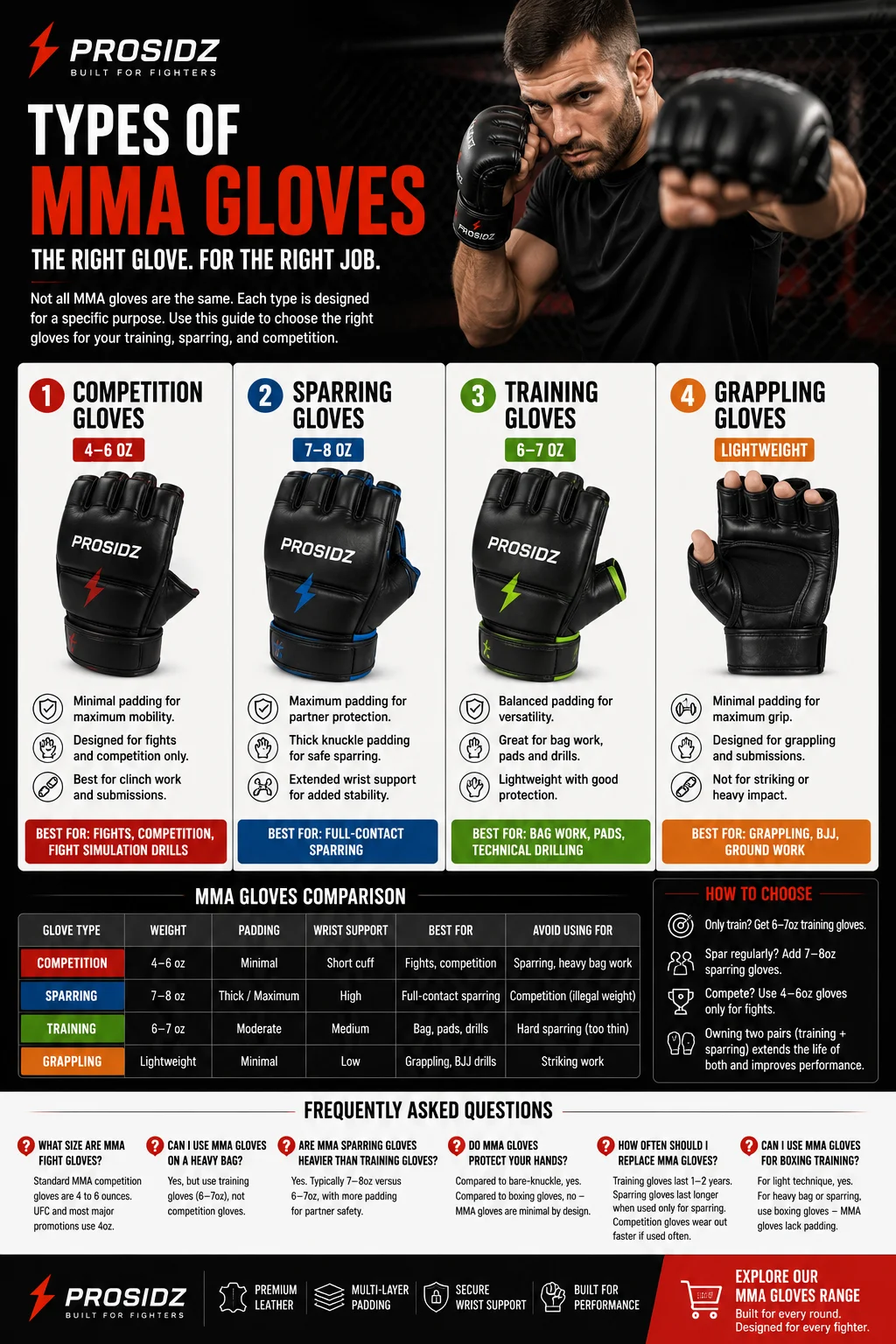
MMA gloves all look roughly similar from across the gym — open palm, exposed fingers, padding over the knuckles. But up close, there are at least four distinct categories of MMA glove, each engineered for a different job, and using the wrong type for the wrong activity is how injuries happen. Competition gloves are not training gloves; sparring gloves are not grappling gloves. This guide walks through the four main categories, the spec differences that actually matter, and which glove belongs in your hand for which session.
Competition MMA Gloves (4-6oz)
Competition MMA gloves are the lightest and most minimal type — typically 4 to 6 ounces, with thin compact padding and short wrist cuffs designed for maximum hand mobility for grappling exchanges. They’re built to meet the unified rules of MMA that govern professional and amateur fights, prioritizing finger dexterity for clinch work and submissions over impact protection. These gloves are not designed for repeated heavy striking — the padding is just enough to keep the rules legal in a fight, not enough to handle hours of bag work or sparring. Use them only for actual competition or short, fight-simulation drills.
MMA Sparring Gloves (7-8oz)
MMA sparring gloves are the heaviest and most padded category — typically 7 to 8 ounces with significantly thicker knuckle padding to protect sparring partners during stand-up exchanges. The padding distribution favors the striking face, while the palm and fingers stay open enough for clinch and takedown work. Many MMA sparring gloves include a curved hand shape that encourages a clenched fist, plus extended wrist cuffs for better wrist support during striking. These are the only gloves that should be worn for full-contact MMA sparring, full stop. Using competition or training gloves for sparring is how training partners end up concussed.
MMA Training Gloves (6-7oz)
Training gloves split the difference — more padding than competition gloves for safer bag and pad work, but lighter and more mobile than sparring gloves for technical drilling. The 6-7 ounce weight range covers most training needs: heavy bag, pad rounds with a coach, light technical sparring, and partner drills that don’t involve full-power striking. Training gloves are the most versatile category and the right choice if you’re only buying one pair of MMA gloves. They handle the daily grind without the bulk of sparring gloves or the minimalism of competition gloves.
| Glove Type | Weight | Best For | Avoid Using For |
|---|---|---|---|
| Competition | 4-6oz | Actual fights, fight drills | Sparring, heavy bag work |
| Sparring | 7-8oz | Full-contact sparring | Competition (illegal weight) |
| Training | 6-7oz | Bag, pads, technical drilling | Hard sparring (too thin) |
| Grappling | Lightweight, fingerless variant | Pure grappling, BJJ-style drills | Striking work |
Grappling-Specific MMA Gloves
Grappling-focused MMA gloves are a smaller category — minimal padding, sometimes with the thumb fully exposed, and designed for pure ground work where finger mobility matters more than knuckle protection. They’re useful for grappling-heavy training sessions where standard MMA gloves get in the way of fine grip work but going completely bare-handed isn’t preferred for hygiene or skin reasons. These are not striking gloves and shouldn’t be used for any meaningful punching. Most MMA practitioners don’t actually need this category — a good training glove handles most grappling drilling well enough.
Picking the Right MMA Gloves for Your Training
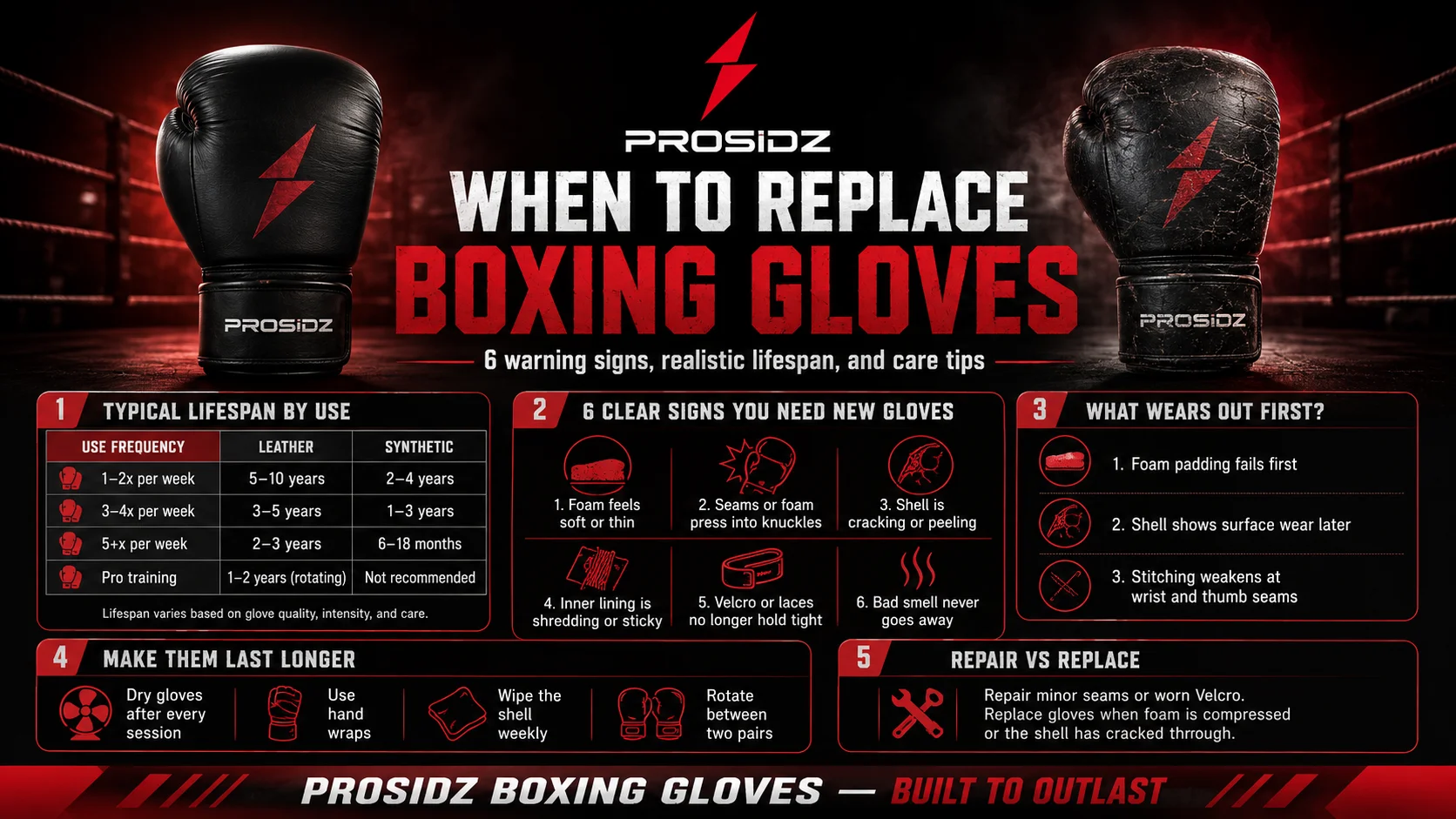
If you only do MMA training without competing or sparring hard, one pair of 6-7oz training gloves covers everything. If you spar regularly, add a dedicated 7-8oz sparring pair. Save your competition gloves for actual fights — wearing them in regular training accelerates wear dramatically and they’re not designed for daily impact. The same as boxing, owning two pairs (training + sparring) is the standard for any serious MMA practitioner, and it nearly doubles the lifespan of both pairs because each one only does the job it’s designed for. Don’t try to make one glove do everything — the spec compromises mean you do every job worse.
Frequently Asked Questions
What size are MMA fight gloves?
Standard MMA competition gloves are 4 to 6 ounces, with the exact weight depending on the regulating body. UFC and most major promotions use 4oz.
Can I use MMA gloves on a heavy bag?
Yes, but use training gloves (6-7oz), not competition gloves. Competition padding is too thin for repeated bag impact.
Are MMA sparring gloves heavier than training gloves?
Yes — typically 7-8oz versus 6-7oz, with more padding distributed over the knuckles for partner safety.
Do MMA gloves protect your hands?
Compared to bare-knuckle, yes — significantly. Compared to boxing gloves, no — MMA gloves are minimal by design to allow grappling.
Can I use MMA gloves for boxing training?
For light technique work, you can. For heavy bag or sparring, switch to boxing gloves — MMA gloves don’t have enough padding for sustained boxing impact.
How often should I replace MMA gloves?
Training gloves typically last one to two years of regular use. Sparring gloves last longer when reserved only for sparring. Competition gloves should be replaced regularly if used often.
Prosidz makes the full MMA glove lineup — competition, sparring, training, and grappling — all built with genuine leather and pro-grade padding. Browse our MMA collection or contact us for team and gym orders.