
Sparring Gloves Explained: Why They’re Different from Bag Gloves


Most beginners walk into a gym, buy one pair of gloves, and use them for everything — bag, mitts, sparring. Six months later they wonder why their training partner has a swollen cheek and their gloves feel dead. The fix is simple but rarely explained: sparring gloves and bag gloves are designed for two different jobs. Using the wrong one for the wrong job damages your gloves, your partner, or both.
Here’s exactly what separates them and how to know which pair belongs in your bag.
What Sparring Gloves Are Built For
A sparring glove has one mission: protect your partner’s head, ribs, and body from your punches without dulling the feeling of clean technique. To do that, sparring gloves use thick, soft, multi-layer foam — usually 16oz, sometimes 18oz for heavier fighters — that spreads impact across a wide surface area instead of focusing it on a knuckle line.
A proper sparring glove feels almost pillowy. That’s the point. You should be able to throw a hard hook and have your partner walk away with their head intact.
What Bag Gloves Are Built For
Bag gloves do the opposite job. They’re built to absorb your end of the impact while letting you train at full power on a heavy bag, double-end bag, or uppercut bag. Foam is denser, more compressed, sometimes layered with shock-absorbing inserts. The wrist and knuckle are reinforced to handle thousands of repetitions without breaking down.
They are not designed to be soft on a person. Hit a sparring partner with bag gloves and they’ll feel every knuckle. Hit a heavy bag with thin sparring foam and you’ll bottom out the padding within weeks. Our bag gloves are engineered with multi-density foam specifically for this kind of daily punishment.
Padding: The Real Technical Difference
Sparring foam: softer, layered, deeper. Designed to deform on impact and recover slowly so multiple consecutive punches still get cushioning.
Bag foam: denser, often combining IMF (Injection Molded Foam) with layered foam. Designed to compress only slightly and rebound quickly so the next punch lands on full-thickness padding.
Weight isn’t the only signal. A 16oz bag glove and a 16oz sparring glove can weigh the same but feel completely different in your hand because of how the foam is built.
Weight: 14oz vs 16oz vs 18oz
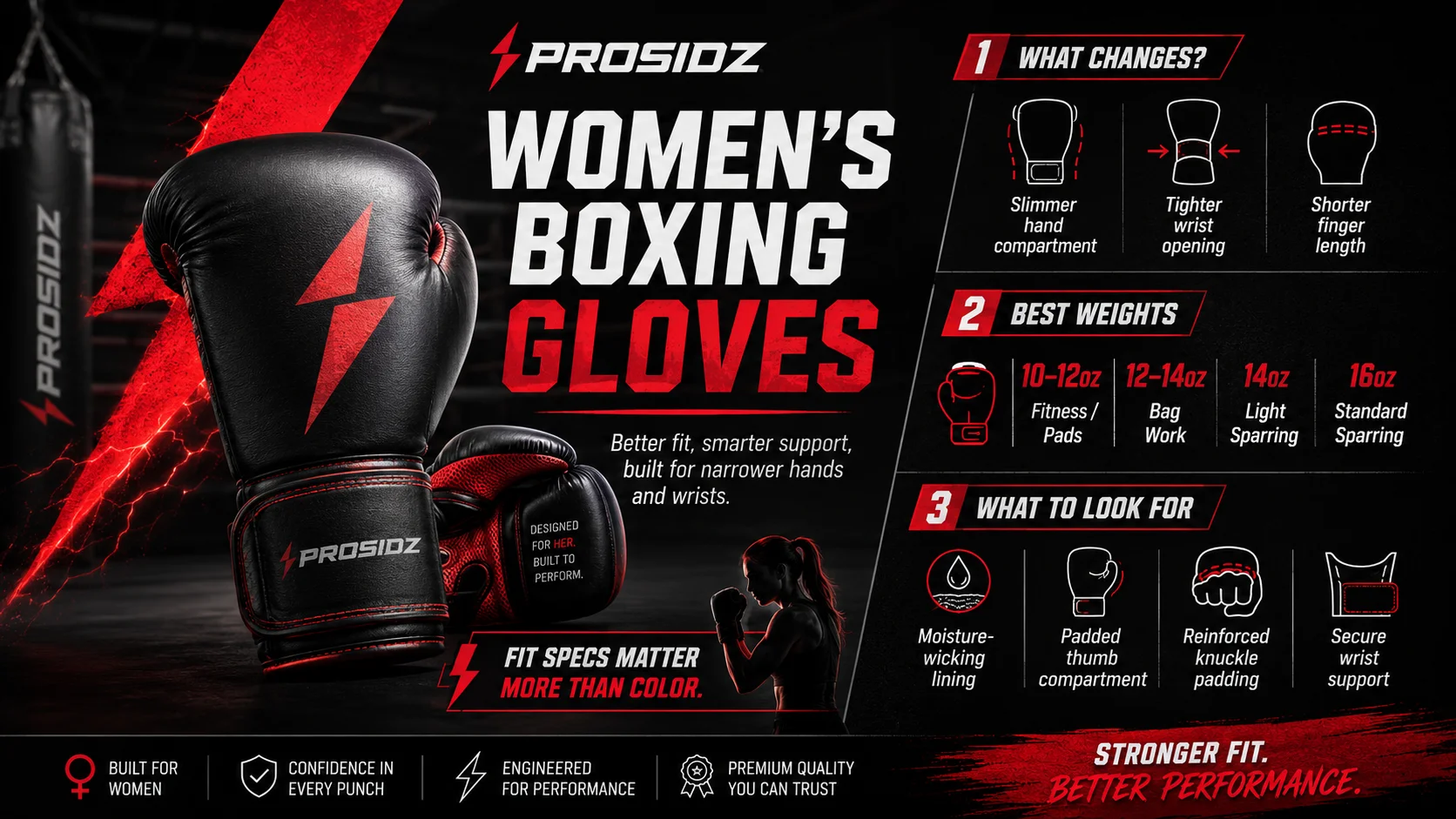
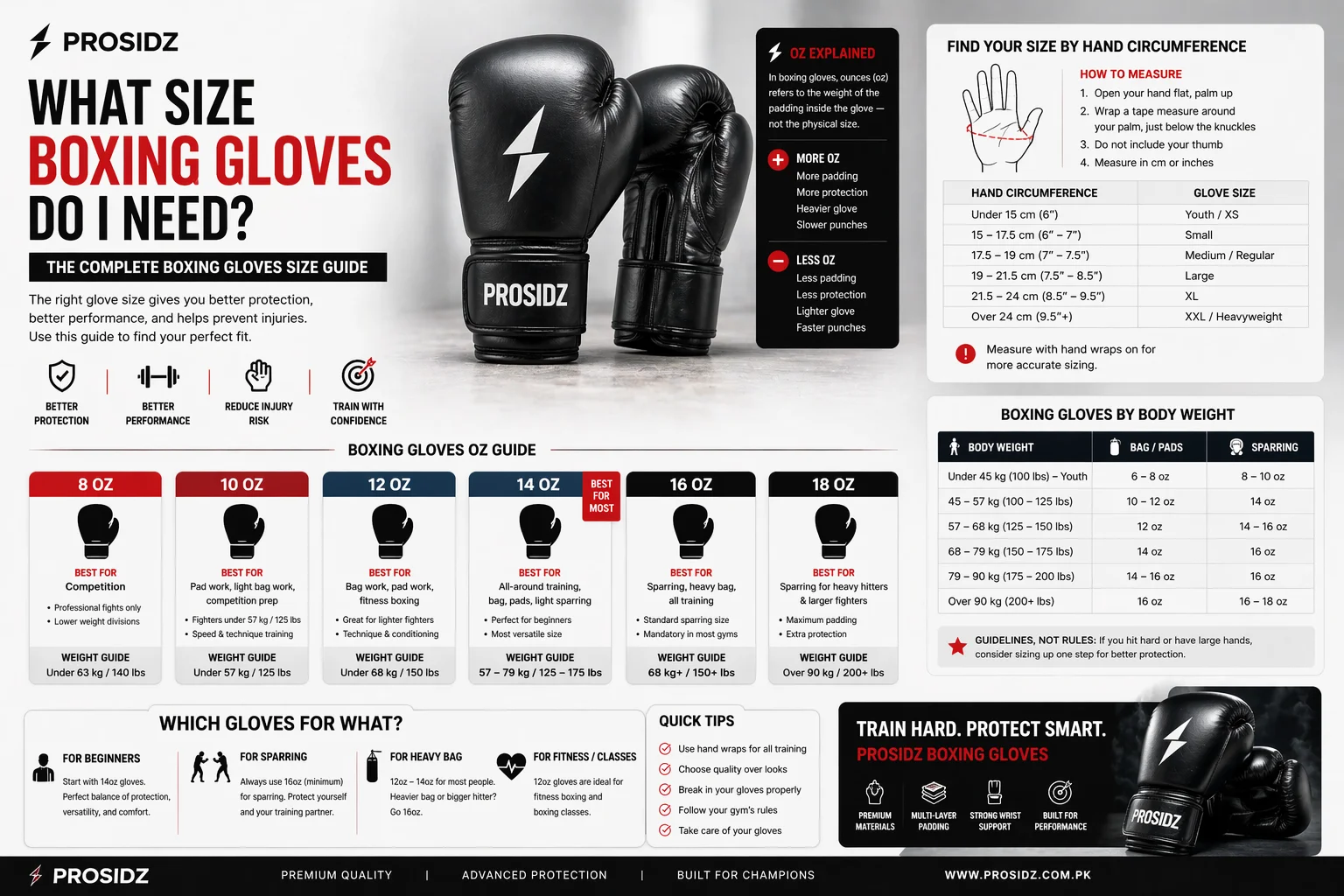
For sparring, 16oz is the standard for adult heavyweight categories and most amateurs over 160lb. Lighter sparring (women, lighter weight classes) sometimes uses 14oz, but most gyms enforce 16oz minimum for safety. 18oz is used by larger fighters or anyone who wants extra protection during high-intensity sessions.
Bag gloves usually run 12oz, 14oz, or 16oz depending on hand size and preference. They feel snappier, less bulky, and let you work for longer rounds without arm fatigue.
Sparring Gloves vs Bag Gloves: Side by Side
| Feature | Sparring Gloves | Bag Gloves |
|---|---|---|
| Foam type | Soft, layered, multi-density | Dense, compressed, IMF or layered |
| Typical weight | 16oz, 18oz | 12oz, 14oz, 16oz |
| Designed to protect | Your training partner | Your hands and the bag |
| Feel on impact | Plush, slow rebound | Firm, fast rebound |
| Used for | Live sparring, technical drills | Heavy bag, speed bag, double-end, mitts |
| Lifespan if cross-used | Foam dies in 4–8 weeks on bag | Bruises partners during sparring |
Can You Use One Pair for Both?
Technically yes, in reality no — not if you train often. A budget all-purpose glove will work for a beginner doing two sessions a week. But once you start sparring properly or hitting the bag four times a week, you need two pairs. Buying one good pair of each costs less long-term than burning through three combined-use pairs in two years.
Most serious boxers own at least 16oz sparring gloves and 14oz bag gloves. Coaches sometimes add a third lighter pair (10–12oz) for mitt work and pad rounds.
How to Make Either Pair Last Longer
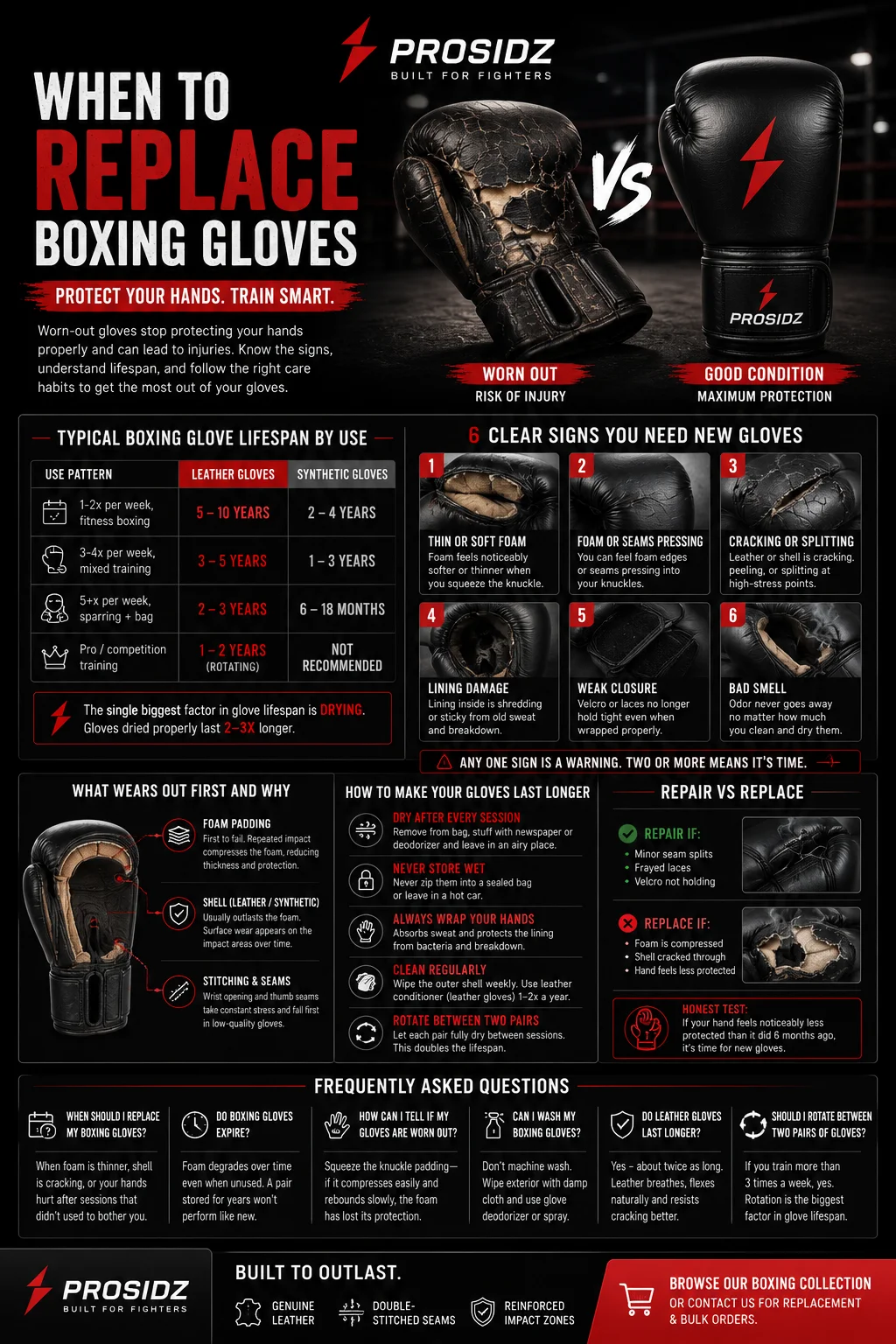
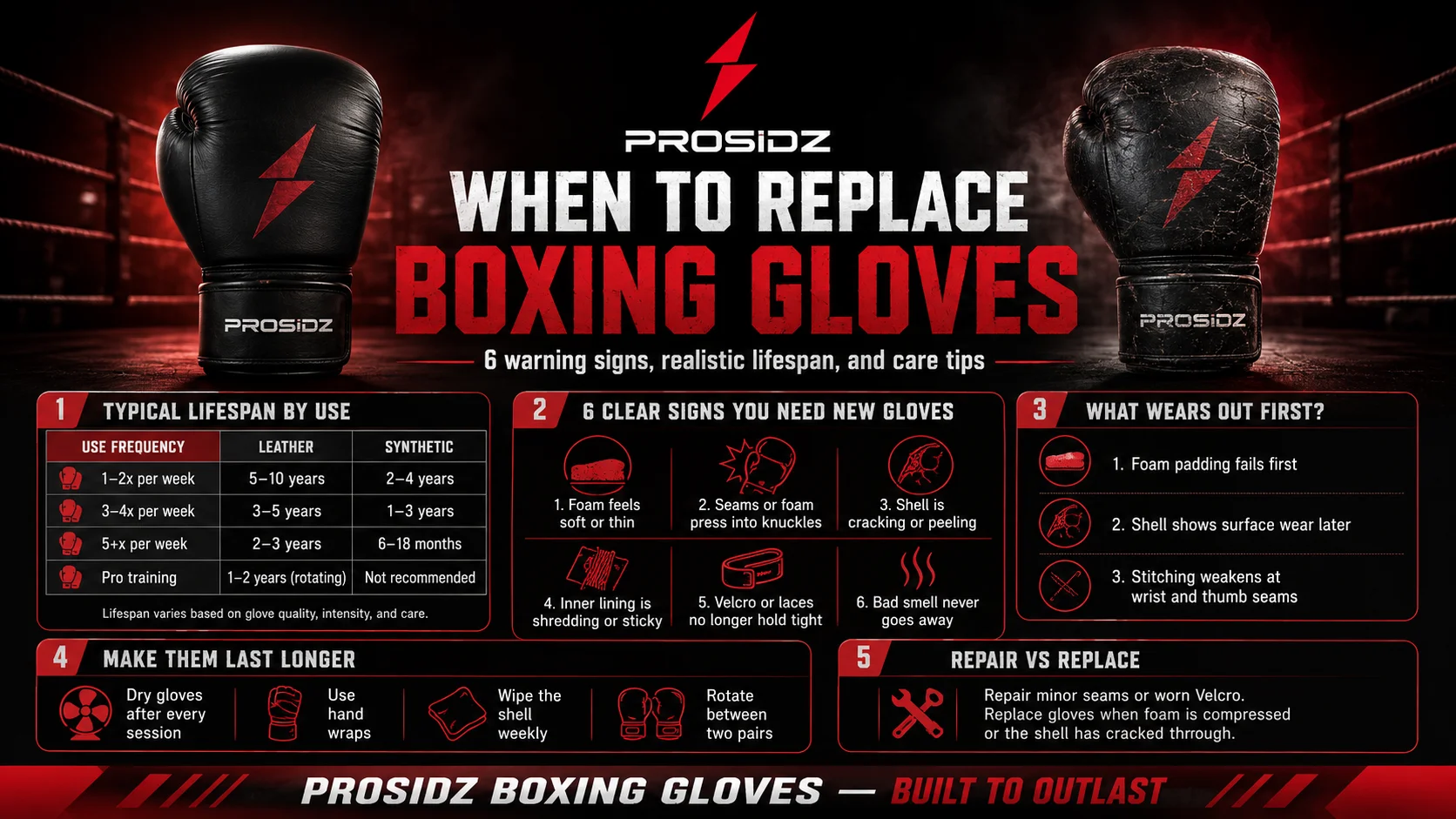
Air them out after every session — open the cuff and stand them upside down. Wipe the inside with antibacterial spray weekly. Never leave them in a hot car or zipped gym bag overnight. Rotate two pairs if you train daily; foam recovers between sessions.
For a complete care routine, see our existing guide on cleaning boxing gloves on the prosidz.com blog.
Ready to Train With Real Gear?
Browse PROSIDZ premium boxing gloves — engineered separately for sparring, bag work, and competition.
Frequently Asked Questions
Can I spar with bag gloves?
You shouldn’t. Bag glove foam is firm and concentrates impact — your partner will feel every shot. It’s a fast way to get banned from open sparring at most gyms.
Can I hit the heavy bag with sparring gloves?
You can, occasionally, but it’ll kill the foam quickly. Sparring foam is built to deform on impact, and a heavy bag delivers thousands of impacts that flatten it within weeks.
Do I need 16oz gloves for sparring?
Most adult gyms require 16oz minimum. Lighter fighters (under 140lb) sometimes use 14oz. Anything below 14oz is not safe for live sparring.
What’s the difference between training gloves and sparring gloves?
‘Training gloves’ is a marketing term — usually a softer all-purpose glove suitable for moderate bag and pad work. ‘Sparring glove’ specifically means the foam is built to protect a partner.
How long do sparring gloves last?
Two to five years with proper care, depending on use frequency. Foam compression is the failure point — once they feel firmer than they did new, retire them from sparring.
Does PROSIDZ sell both?
Yes. PROSIDZ produces dedicated sparring gloves and bag gloves with different foam constructions for each purpose. Contact PROSIDZ for bulk orders if outfitting a gym or club.