
What Size Boxing Gloves Do I Need? (The Complete Oz & Weight Guide)

Why Getting the Wrong Size Is Costly
Here’s what nobody explains clearly in product listings: boxing glove “size” in ounces refers to the weight of the padding inside the glove — not the physical size of the glove on your hand. More ounces equals more padding, more protection, and more weight your arms carry with every punch.
Buy too light and you risk hand and wrist injuries from insufficient padding. Buy too heavy and your technique suffers, your arms fatigue faster, and you develop bad habits trying to compensate.
This guide gives you the exact oz size for your body weight, hand measurement, and training type — so you buy right the first time.
Step 1 — Understand What Oz Actually Means
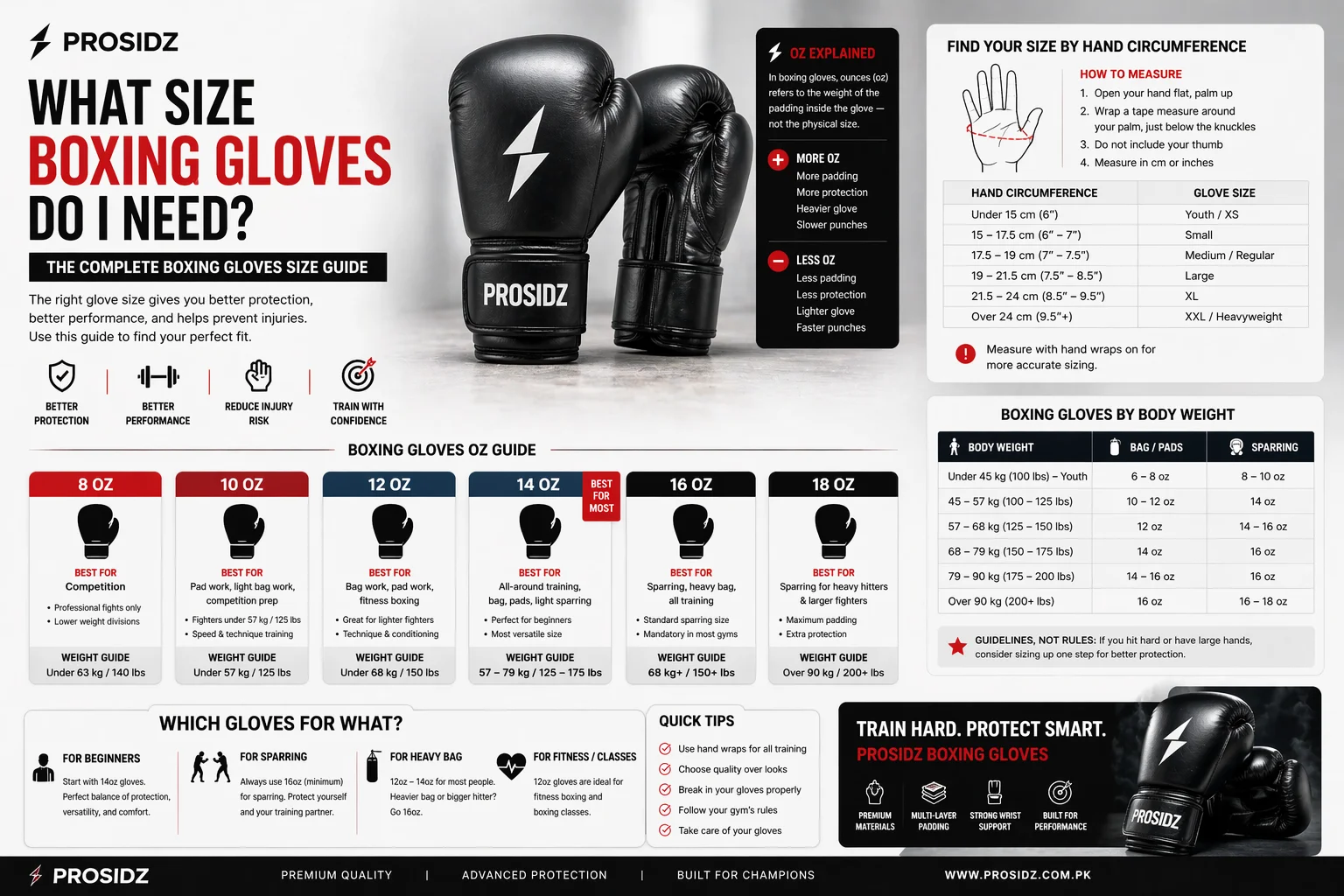
In boxing gloves, ounces (oz) = padding weight per glove. It tells you how much foam and protection sits between your knuckles and whatever you are hitting.
- More oz = more padding = more protection = heavier glove = slower punches
- Less oz = less padding = less protection = lighter glove = faster punches
This is why competition gloves (8–10 oz) are lighter — fighters want speed and power delivery. Sparring gloves (16 oz) are heavier — fighters want to protect each other during training.
The number does NOT tell you:
- The physical dimensions of the hand compartment (that varies by brand)
- How hard the glove hits (heavier gloves do NOT hit harder)
- The overall quality of the glove
Step 2 — Find Your Size by Body Weight
Body weight is the fastest way to identify your starting oz range. Use this as your primary guide:
| Body Weight | Recommended Oz (Bag/Pads) | Recommended Oz (Sparring) |
|---|---|---|
| Under 45 kg (100 lbs) — Youth | 6 – 8 oz | 8 – 10 oz |
| 45 – 57 kg (100 – 125 lbs) | 10 – 12 oz | 14 oz |
| 57 – 68 kg (125 – 150 lbs) | 12 oz | 14 – 16 oz |
| 68 – 79 kg (150 – 175 lbs) | 14 oz | 16 oz |
| 79 – 90 kg (175 – 200 lbs) | 14 – 16 oz | 16 oz |
| Over 90 kg (200 lbs+) | 16 oz | 16 – 18 oz |
Important: These are guidelines, not rules. If you hit hard or have large hands, size up one step.
Step 3 — Measure Your Hand Circumference
Hand circumference is actually a more precise indicator of fit than body weight alone. Two people at the same weight can have very different hand sizes — especially if you have naturally large or small hands for your frame.
How to measure your hand circumference:
- Open your dominant hand flat, palm facing up, fingers spread wide
- Wrap a flexible tape measure around your palm, just below the knuckles
- Do NOT include your thumb in the measurement
- Note the number in inches or centimetres
No tape measure? Use a piece of string, wrap it around your hand, mark where it meets, then measure that length against a ruler.
Hand circumference to glove size:
| Hand Circumference | Glove Size |
|---|---|
| Under 15 cm (6″) | Youth / XS |
| 15 – 17.5 cm (6″ – 7″) | Small |
| 17.5 – 19 cm (7″ – 7.5″) | Medium / Regular |
| 19 – 21.5 cm (7.5″ – 8.5″) | Large |
| 21.5 – 24 cm (8.5″ – 9.5″) | XL |
| Over 24 cm (9.5″+) | XXL / Heavyweight |
Always measure with your hand wraps on if you plan to train with wraps — wraps add roughly 2–3 cm to your hand circumference and will affect fit inside the glove.
Step 4 — Match Your Oz to Your Training Type
Body weight and hand size tell you the fit. Your training type tells you the oz. Both factors together give you the correct glove.
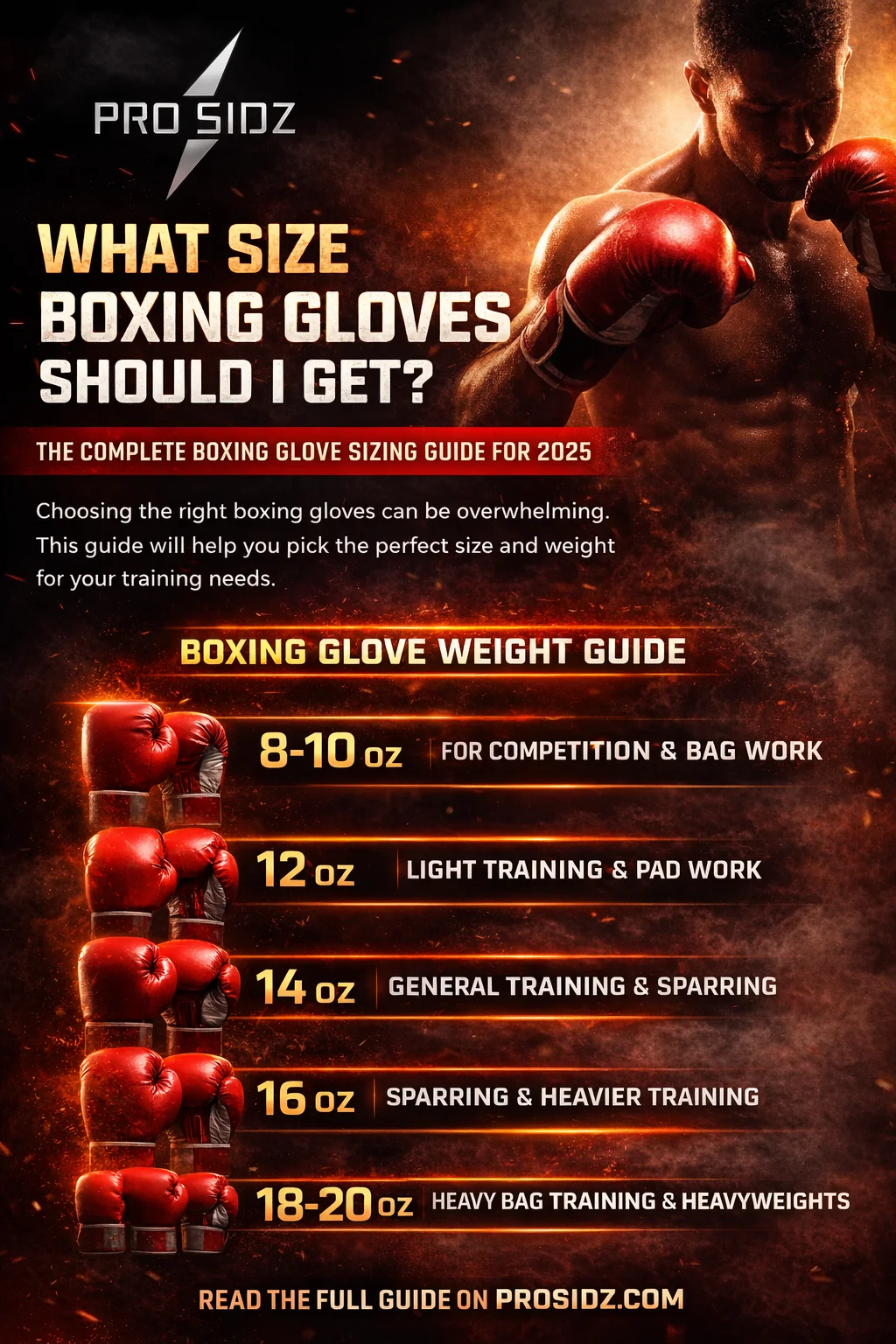
8 oz Boxing Gloves — Who Are They For?
8 oz gloves are competition gloves for professional fighters in lower weight divisions. They are very lightly padded and designed for maximum speed and punch delivery in a regulated fight setting.
Use 8 oz for: Professional competition only (under 63 kg / 140 lbs) Do NOT use 8 oz for: Bag work, sparring, or general training — insufficient padding will damage your hands over time
10 oz Boxing Gloves — Who Are They For?
10 oz gloves bridge competition and light training. They are suitable for lighter fighters doing pad work, speed bag, or competition preparation. Most adult hands require 10 oz minimum for any real bag contact.
Use 10 oz for: Pad work and light bag training for fighters under 57 kg / 125 lbs, or competition prep Do NOT use 10 oz for: Regular sparring — most gyms prohibit 10 oz for partner contact
12 oz Boxing Gloves — Who Are They For?
12 oz is the standard all-around training size for lighter fighters. It provides enough padding for bag and pad work, and works for light, technical sparring between smaller fighters.
Use 12 oz for: Bag work and pad work for fighters under 68 kg / 150 lbs; fitness boxing classes; speed and technique development Do NOT use 12 oz for: Regular hard sparring — not enough padding to protect your partner adequately
14 oz Boxing Gloves — Who Are They For?
14 oz is the sweet spot for most adult fighters and the single best starting size for beginners who want one versatile pair. It offers solid padding for bag work, comfortable pad sessions, and acceptable light sparring.
Use 14 oz for: All-around training, bag work, pad work, and light sparring for fighters in the 57–79 kg / 125–175 lbs range Best for: Beginners who want one pair that handles everything
16 oz Boxing Gloves — Who Are They For?
16 oz is the standard sparring glove for most gyms worldwide. The extra padding protects both you and your partner during live contact rounds. Most gyms require a minimum of 16 oz for any sparring — always check your gym’s policy before buying.
Use 16 oz for: All sparring sessions regardless of weight; heavy bag training for larger fighters (over 80 kg); general training for heavier fighters The rule: If you are sparring — always 16 oz. No exceptions.
18 oz Boxing Gloves — Who Are They For?
18 oz gloves are for heavier fighters (over 90 kg / 200 lbs) who hit with significant power during sparring. The extra padding gives maximum partner protection during hard contact.
Use 18 oz for: Sparring for fighters over 90 kg who hit hard; coaches who hold pads and receive heavy shots regularly
The Complete Oz Cheat Sheet
| Oz | Type | Best Use | Who |
|---|---|---|---|
| 6 – 8 oz | Youth / Competition | Kids training; pro fights (small divisions) | Under 45 kg |
| 10 oz | Light Training / Competition | Pad work; light bags; pro competition | Under 57 kg |
| 12 oz | Training | Bag work; pad work; fitness boxing | 57 – 68 kg |
| 14 oz | All-Around Training | Bag, pads, light sparring; beginners | 57 – 79 kg |
| 16 oz | Sparring | All sparring; heavy bag (larger fighters) | 68 kg+ |
| 18 oz | Heavy Sparring | Hard sparring for big, powerful fighters | 90 kg+ |
Common Sizing Mistakes (And How to Avoid Them)
Mistake 1 — Buying sparring-weight gloves for bag work only
16 oz gloves are heavier than necessary for solo bag sessions if you’re a lighter fighter. The extra weight tires your arms faster and slows technique development. If you’re never sparring, 12–14 oz is enough.
Mistake 2 — Buying bag-weight gloves for sparring
This is the most dangerous mistake. Turning up to sparring with 10 or 12 oz gloves when your partner expects 16 oz is a safety issue — less padding means harder impact on your partner’s head and body. Always match or exceed your gym’s required sparring oz.
Mistake 3 — Not wearing hand wraps when sizing
Hand wraps add real volume to your hand. If you try gloves on bare-handed then train with wraps, the gloves will feel noticeably tighter and more restrictive. Always replicate your training setup when sizing — wraps on, make a fist, check that fingers reach the top of the glove without being crushed.
Mistake 4 — Assuming heavier oz hits harder
This is completely backwards. Heavier gloves have MORE padding — they actually reduce the impact felt by your opponent or training partner. Competition gloves are lighter because fighters want their punches to land with full force. Training gloves are heavier to protect everyone involved.
Mistake 5 — Buying one size for everything
Professionals keep multiple pairs — lighter gloves for speed and technique work, heavier gloves for sparring. If your budget allows, consider two pairs: 12–14 oz for bag and pad work, 16 oz for sparring. This extends the life of both pairs and optimises every training session.
How Gloves Should Fit — The Physical Check
Getting the right oz is half the job. The glove also needs to physically fit your hand correctly. Here’s what a proper fit feels like:
Fingers: Should reach the top of the glove without being crammed or curled. If there’s a large gap at the top, the glove is too big. If your fingers are bent against the top, too small.
Fist: When you close your hand into a fist inside the glove, it should feel snug — firm contact all around — without cutting off circulation or feeling painfully tight.
Wrist strap: Should fasten firmly with at least one full wrap of Velcro remaining. If you’re using the last inch of the strap to close it, the glove is too small. If the strap has excessive overlap, potentially too large.
Thumb: Should sit naturally in its own compartment without forcing. A properly fitted thumb compartment reduces the risk of thumb sprains during sparring.
Movement test: Make a fist, then open your hand fully. Repeat several times. The glove should move naturally with your hand without resistance or slipping.
Boxing Glove Size for Women
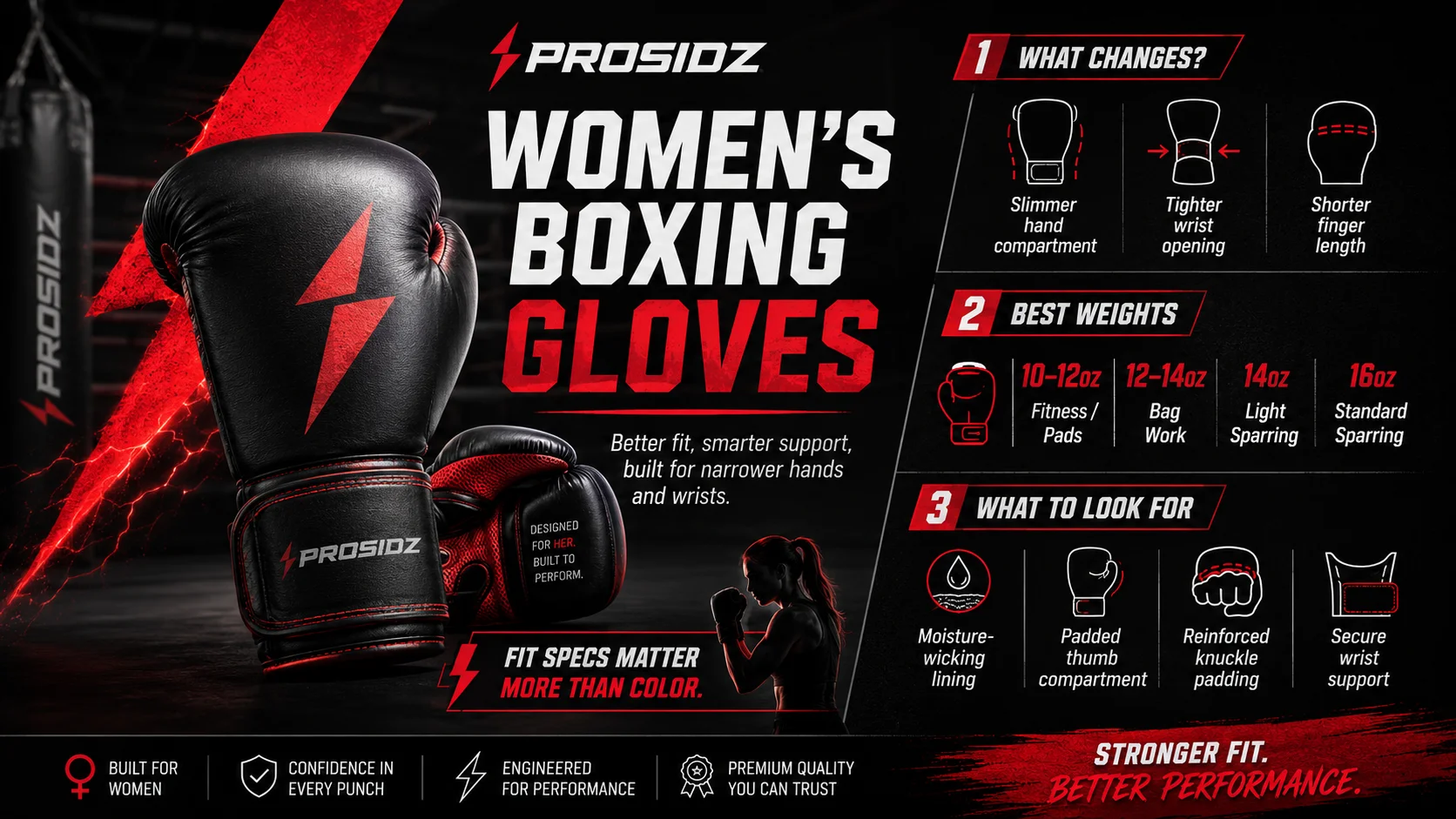
Boxing glove sizing is fundamentally the same for women — oz and hand circumference guidelines apply equally. However, many women have narrower hand shapes relative to their circumference, which means standard unisex gloves can feel roomy even at the right oz.
If standard gloves feel too wide or loose in the hand compartment, look for gloves specifically labelled as women’s fit or narrow fit — several quality brands offer these. The oz selection by body weight remains the same.
Boxing Glove Size for Kids and Teenagers
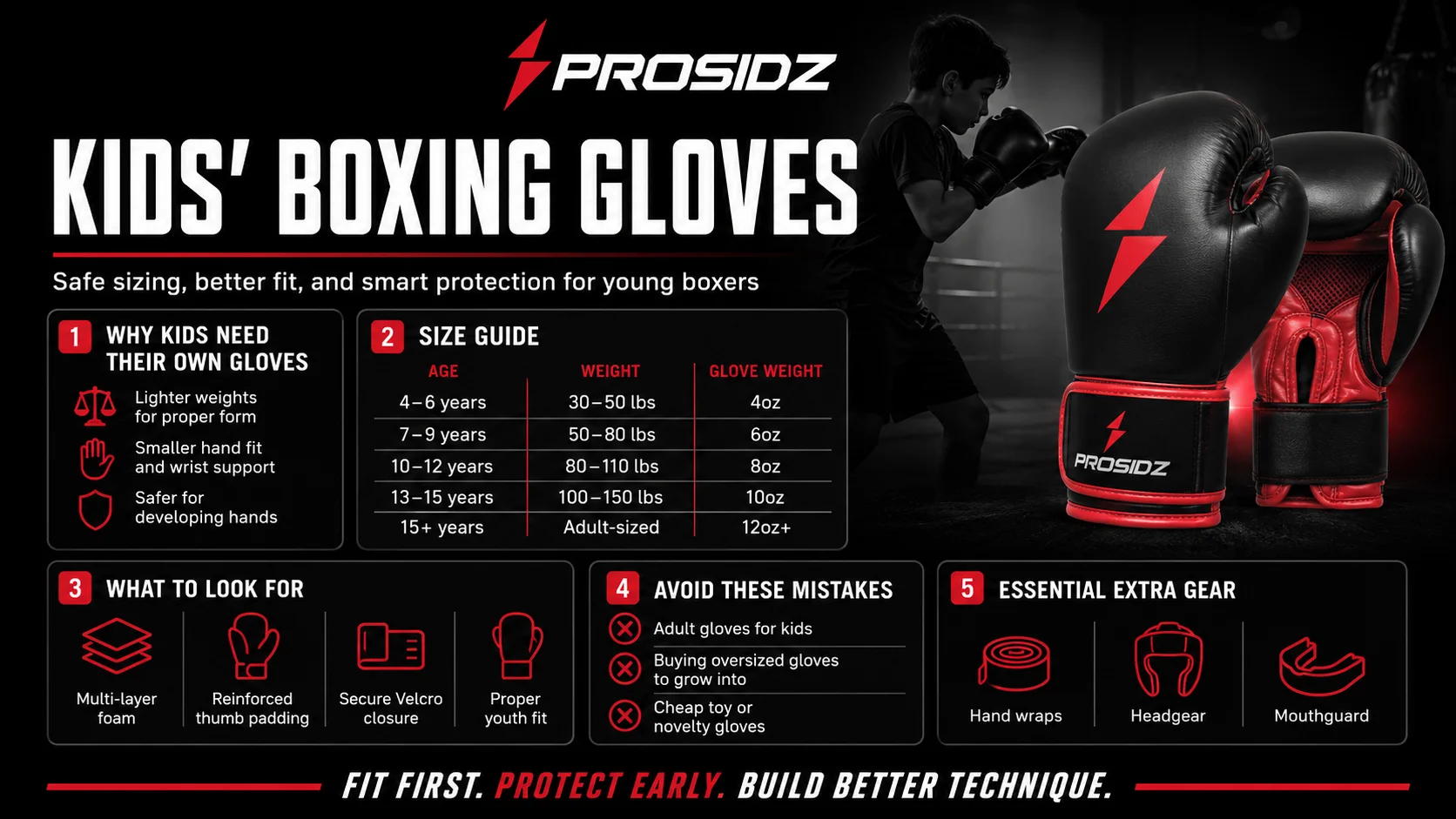
Children’s gloves start at 4 oz for very young beginners and go up to 8 oz for juniors approaching teenage years. Teenagers with adult-sized hands should follow the adult body weight chart.
| Age / Weight | Recommended Oz |
|---|---|
| Under 8 years / under 30 kg | 4 – 6 oz |
| 8–12 years / 30–45 kg | 6 – 8 oz |
| 12–16 years / 45–57 kg | 8 – 10 oz |
| 16+ years — follow adult chart | 12 oz+ |
Do You Need Different Sizes for Different Training?
Short answer: ideally yes, practically it depends on your budget and training frequency.
If you train 1–2x per week (casual/fitness): One pair of 14 oz covers bag, pads, and light sparring. Fine.
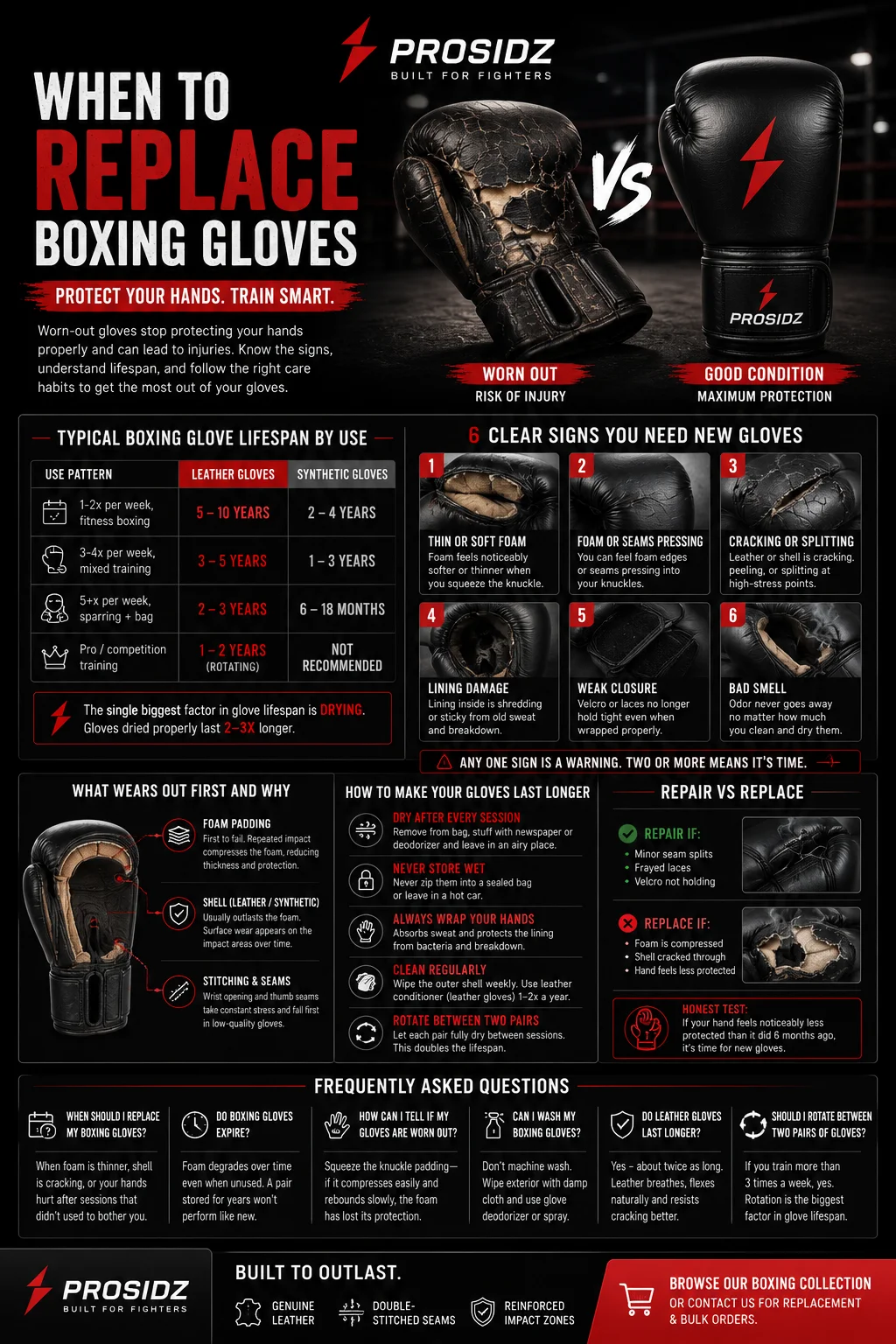
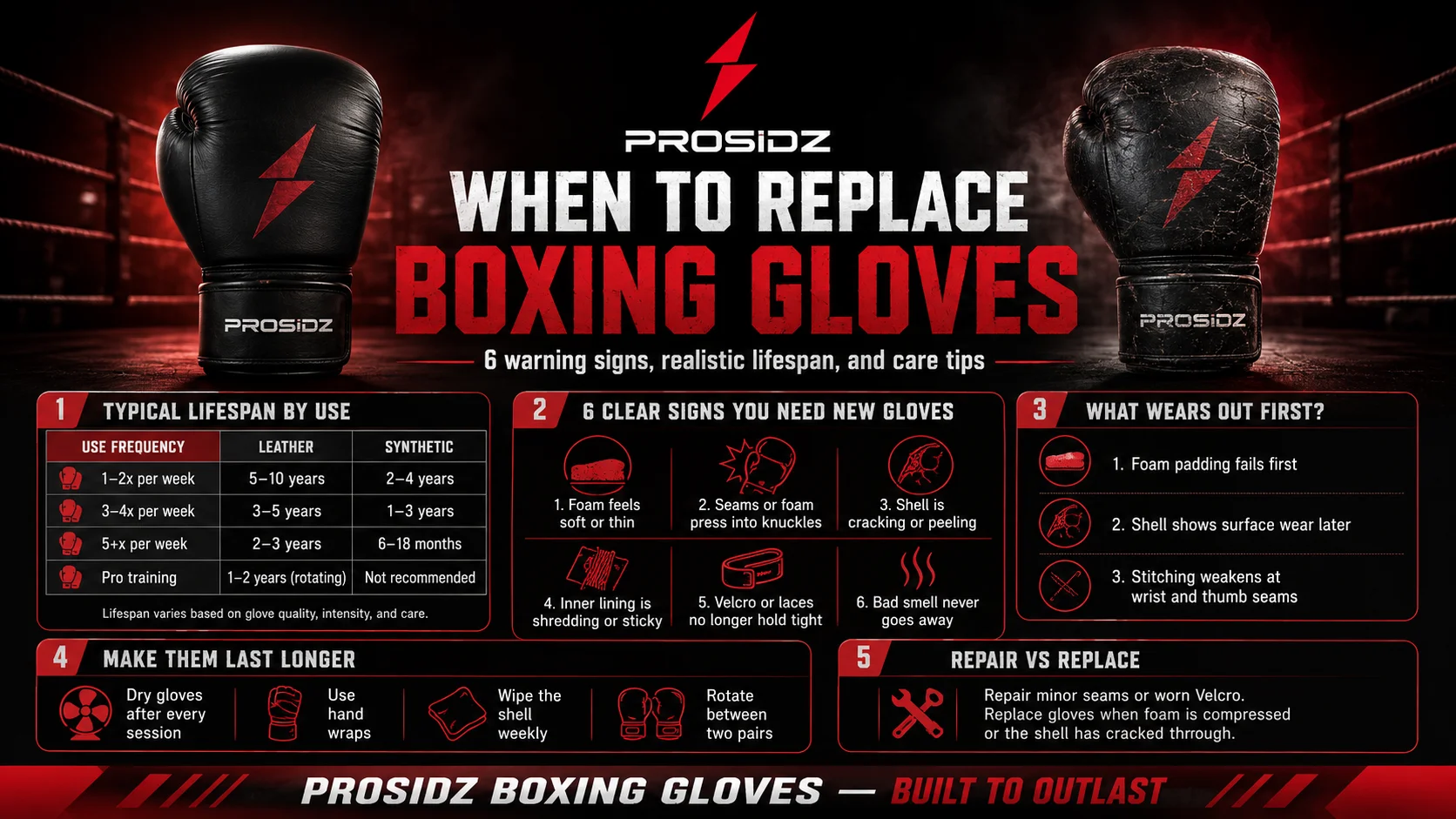
If you train 3–4x per week (regular): Two pairs recommended. 12 oz for bag/pad sessions, 16 oz for sparring. Rotating pairs extends glove life significantly.
If you train 5+ times per week (serious/competitive): Multiple pairs are standard. Lighter gloves for technique and speed work, 16 oz for sparring, competition gloves when fight prep begins.
Quick Decision Guide — What Size Do I Buy?
Answer these three questions:
1. What is your body weight? Under 68 kg → start at 12–14 oz | 68–90 kg → start at 14–16 oz | Over 90 kg → 16–18 oz
2. What will you mainly use them for? Bag/pads only → lower end of your weight range | Sparring → 16 oz minimum always
3. Do you have large hands for your weight? Yes → size up one step | No → follow the body weight guide as is
Shop Boxing Gloves by Size at Prosidz.com
We carry the full range from 10 oz training gloves to 18 oz heavy sparring gloves — all built for real training, not just display.
👉 Shop 12 oz Boxing Gloves → 👉 Shop 14 oz Boxing Gloves → 👉 Shop 16 oz Boxing Gloves — Sparring → 👉 View Full Boxing Gloves Collection → 👉 Shop MMA Gloves →
Frequently Asked Questions
What size boxing gloves should a beginner get? Most beginners should start with 14 oz gloves. They provide enough padding for bag work, pad sessions, and introductory sparring. Lighter fighters (under 65 kg) doing bag work only can use 12 oz. If you will be sparring from the start, go straight to 16 oz.
What is the difference between 12 oz and 14 oz boxing gloves? The main difference is padding thickness and weight. 14 oz gloves have more padding and are heavier, providing better protection for sparring and training at higher intensity. 12 oz gloves are lighter and better suited to bag and pad work for fighters under 68 kg.
What is the difference between 14 oz and 16 oz boxing gloves? 16 oz gloves have significantly more padding than 14 oz, making them the standard requirement for sparring in most gyms. 14 oz is suitable for bag and pad work and light sparring, while 16 oz is mandatory for any regular partner contact to protect both fighters.
Do heavier boxing gloves hit harder? No — this is one of the most common boxing myths. Heavier gloves have more padding, which actually softens the impact on your partner. This is exactly why sparring gloves (16 oz) are heavier — more protection for everyone. True punching power comes from technique, not glove weight.
What oz gloves do professional boxers use? Professional boxers compete in 8 oz gloves (fighters at 63 kg / 140 lbs and below) or 10 oz gloves (heavier fighters). However, professionals train in much heavier gloves — typically 14–16 oz for bag and pad work, and 16 oz for sparring.
Should I buy the same size boxing gloves for sparring and bag work? Ideally no. For bag work, choose your appropriate weight-based oz (typically 12–14 oz). For sparring, always use 16 oz minimum. If budget allows, keep separate pairs for each purpose — this also extends the life of both pairs.
How do I know if boxing gloves fit properly? Your fingers should reach the top of the glove without being crushed. Your closed fist should feel snug but not painfully tight. The wrist strap should close firmly with room to spare. Always try gloves on with your hand wraps on for an accurate fit test.
Last updated: April 2026 | Written by the Prosidz gear team